
Inside you are soft
Self-protecting without hardening

Maybe you were taught to see softness as weakness. Something for those who are “too emotional” and apparently, being too emotional is a crime.
We need to be strong, controlled, capable of holding everything together, of enduring pressure without giving in.

But we only need to look at a tense body —
shoulders raised to the ears,
jaw locked,
breath shallow,
belly held tight,
to see that a rigid body is not stronger.
Quite the opposite: it is a body that can’t trust its own foundation and structure.
A body that becomes hardened, dry, inflexible. And everything that is inflexible breaks more easily.
An inflexible body tends to house an inflexible mind. A reactive mind, that can only see two sides—good or bad, right or wrong. Attack or defend. A mind on high alert, that mistakes change and uncertainty for threat.
We are living through a moment of collective trauma. Maybe you don’t call it that, but you feel it.
In tight muscles,
in a constricted breath,
in a restless mind,
in a heavy heart,
in the exhaustion that won’t lift,
in the vague sense that the ceiling is about to come down.
The body is feeling all of this, even when the mind has learned to escape.
And then we harden ourselves to cope. But in hardening, are we really protecting ourselves?
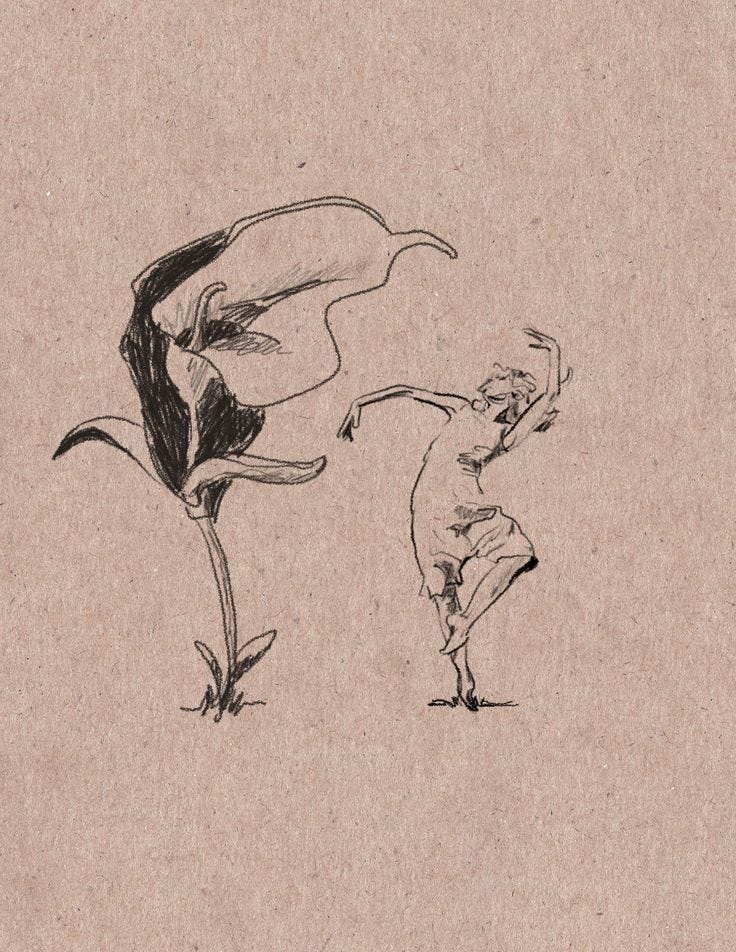
Hardening has a logic. It makes sense in a context where our vulnerability is punished, rejected, manipulated. In a social context that reads softness as passivity, that mistakes a porous, sensitive body for a weak one—or a less capable one, for refusing to keep pushing through.
The hard shell we build around our soft body is an understandable response to these conditions. A clumsy way of trying to protect our sensitive body, which remains soft on the inside, even when wrapped in armor.
But the cost of that armor is high. We lose access to sensing and feeling, and with it, to what we want, what moves us, what nourishes us, our resources to move forward in integrity. We become efficient, but hollow. We function, but for what exactly?
We escape the felt experience of the body, and outside the body, we make decisions from fear disguised as reason, from desperate attempts at self-protection masquerading as sovereign choice.
A soft body is not a weak body. On the contrary, it is a body that refuses to dissociate, to go numb, to disconnect.
Staying soft is not collapsing into resignation, but restoring the flexibility of a body that, when truly relaxed and awake, can respond to what life brings with genuine autonomy, not with protective patterns that alienate us from ourselves and from the world.
It is precisely in this soft, responsive state—in which we’re capable of protecting ourselves in more skillful ways—that we can access a strength from the inside out that rigidity blocks.
Keeping the body soft is an act of resistance. And an urgent one.
This is what I want to explore together on March 21st.
Join us for In Our Soft Bodies, a day-long immersion in Somatic & Expressive Arts, in Pasadena. For all the details, visit this link.

To register, email analiz@embodiedcreatures.com
If you know someone in LA who might resonate with this offering, please share this invitation with them.
Choose softness, stay connected.
Warmly,
Ana Liz