
#8. Iemanjá
An invitation to reconnect with your waters

Today is Iemanjá’s day. In Candomblé, Iemanjá is the energy and force of the waters, the queen of rivers and seas.
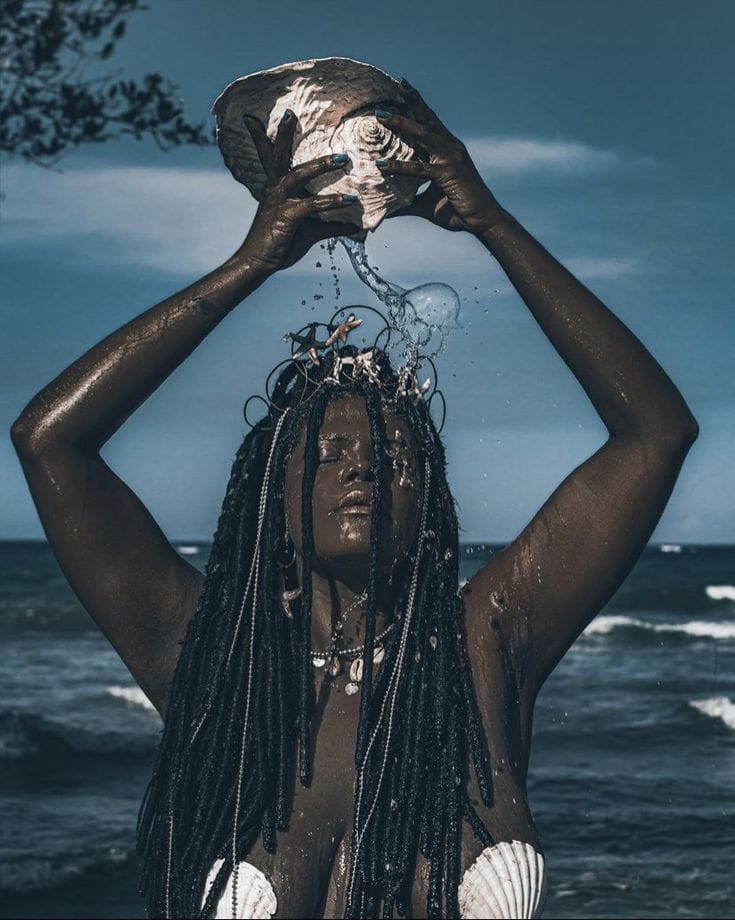
Her name comes from the Yoruba expression YéYé Omó Ejá, which means "Mother whose children are fish." She is the mother of all, the one who sustains humanity—her vulva and breasts are sacred.
According to legend, from Iemanjá’s torn breasts, all the rivers of the world sprang forth. Her tears turned into rivers and flowed toward the ocean, making her a symbol of the power of water—the force that gives life and transforms.
One of her strongest symbols is the mirror, which invites us to self-reflection and the recognition of our inner potential.
In Africa, Iemanjá was worshiped by the Egba people in the region of Ifé and Ibadan, where the Yemojá River flows. When this people migrated to Abeokuta, their sacred symbols were carried and cast into the Ogun River. In Brazil, brought by enslaved peoples, her worship expanded to the salt waters, associating her with the sea. This is how she became one of the most revered Orixás, celebrated especially on February 2nd.

In Salvador, Bahia—where I was born and where my mother’s family is from—“Festa de Iemanjá” is recognized as Cultural Heritage and is considered the largest celebration of Afro-Brazilian culture in Bahia. For 103 years, on February 2nd, Iemanjá’s children have gathered to offer her gifts as a gesture of gratitude and a wish for abundance. The community sings, dances, and brings flowers, perfumes, mirrors, and other offerings to the sea.
Today, I take this opportunity to share a little of this culture that, ironically, I was not able to experience firsthand, as I left Bahia at a young age. However, my maternal grandmother was a mãe de santo in Candomblé, and even though I didn’t have the chance to be close to her and remained unaware of this for decades, I have always felt a deep connection to water and a profound fascination with Iemanjá.
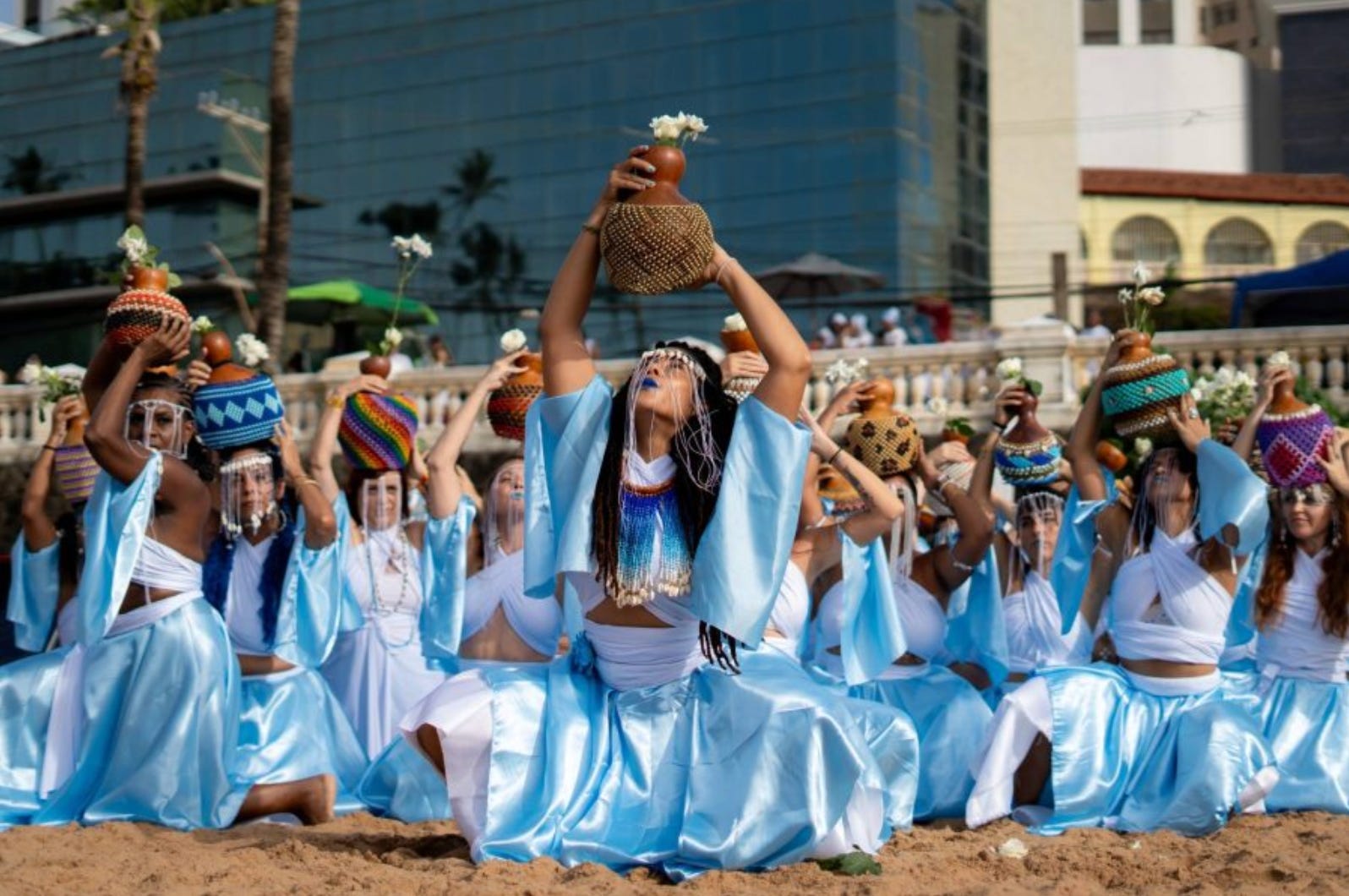
In recent years, through my practice of movement and dance as a ritual of reconnection with my ancestry and body memory, I have come to understand that, like my mother and grandmother, Iemanjá lives within me. The waters she reigns over are also the waters of my body. Her weeping is also my weeping. My movement of self-reflection and care—for myself, for the environment, and for other living beings—is also a way of honoring my origins and my lineage of women whose vulvas, breasts, and bodies are sacred.
I like to think that we are all children of Iemanjá, as we are all made of water.
In celebration of her, I offer you a few self-reflective prompts as an invitation to explore your inner waters and connect with your own emotional depth:
What gifts, material or immaterial, can I offer myself today to nourish my heart with peace and harmony, even in the face of life’s challenges?
What dreams and desires within me are asking for care and space to bloom?
What overflows in abundance in my life today? And in my body?
When I look in the mirror, what do I see beyond my appearance? What parts of myself are asking to be seen with more love and understanding?
What waters am I swimming in right now? Do they support and nourish me, or is it time to seek a new current?
Odoyá!
What a beautiful reflection on this goddess and the ripples of the traditions that celebrate her!