
How to forgive
You don't have to.

Is it possible to live well while carrying an unforgiven relationship?
I’ve been sitting with this question, reflecting on how it challenges most of what we were taught about forgiveness, about healing, about what it means to be a good person.
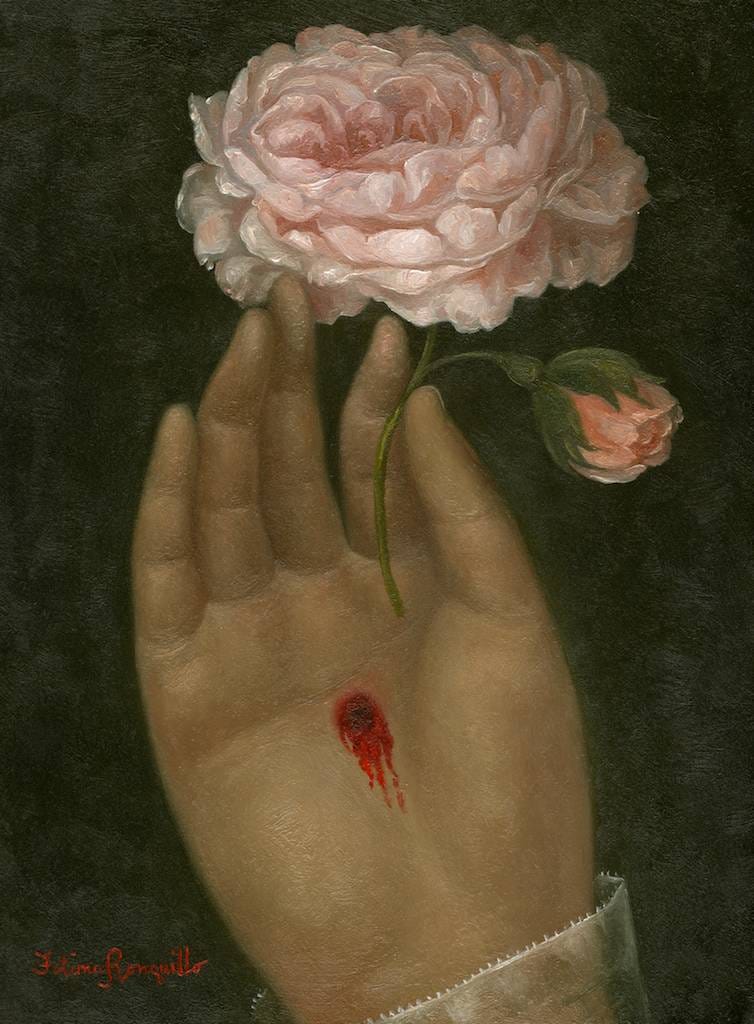
We were taught that forgiveness is an intellectual decision, a choice to release resentment toward someone who has harmed us. Embedded in that understanding — in religious framing, in family dynamics, and even in therapeutic spaces — is the assumption that the healed person forgives. That if you cannot forgive, there’s something wrong with you, something that needs more work, more healing, more goodness on your part.
I don’t believe that.
Who taught you that forgiveness was required? Was it a person, an institution, a feeling in the room when someone didn’t forgive? Did you grow up with the idea of a punishing god, or one that demands that, when struck in the face, you “turn the other cheek”? What did people call those who didn’t forgive - petty, bitter, resentful? Who benefited when you forgave? Could you choose not to forgive and still be good?
Most of us grew up under the myth of the patriarchal god who punishes us for being bad and expects us to forgive in order to be good. If not in our homes, then in society at large. Both the patriarchal god and the patriarchal family operate through a logic of unconditional loyalty that only moves in one direction. The child owes the parent forgiveness, as the believer owes it to god, at the risk of being deemed unworthy of god’s forgiveness herself. The woman owes forgiveness to the man, but not the other way around.
Forgiveness, in these terms, becomes less a spiritual practice and more a mechanism of compliance. It means: don’t make this difficult, don’t name what happened, return to normalcy. Often, it is put entirely on us if we can’t do so - as if being unforgiving of abuse said more about the badness of the one who didn’t forgive than of those who caused the harm.
This seems especially evident in family dynamics. We’re expected to forgive an abusive, absent, or neglectful parent in a way we’re not expected to forgive other people. We see, even in progressive circles, the persistent expectation that we find a way to be on good terms with our family, despite what they’ve caused us, because “they are family.”
If you had a partner who abused you, would it be fair to expect you to forgive him? Of course not. Then how could it be fair to expect you to forgive your abusive father?
In these situations, forgiveness becomes a tool for preserving the status quo, demanded of you as a way to keep you in a relationship that does you harm, simply because we’re supposed to love family unconditionally. But if that same family abused you, put you in a constant state of fear, made you feel worthless, then their love was absolutely not unconditional. So again, the double standard.

We’re even told that forgiving someone who can’t recognize the harm they caused is the highest form of goodness, placing all the responsibility for the relationship on us and implying that not forgiving them shows how bad we are.
The thing is that forgiveness requires a release of resentment, and you can’t release something you haven’t held - the pain of the abuse, the grief, the rage, the ambivalent feelings that come when the person you love, or are supposed to love, is also the person you can’t get yourself to forgive. It can be very hard to hold these feelings when you’ve learned that you’re not supposed to have them.
The idea that forgiving is a decision we make cognitively bypasses the body entirely.
The pain that brought us to grapple with forgiveness in the first place lives in the body.
You cannot forgive someone who caused you tremendous pain if you don’t allow yourself to turn towards the pain. Thirty years later, you walk into the same room as your father and your body tenses up immediately, making itself smaller before you’ve had a single thought. The child is still there, still bracing. That’s the body’s memory, alive and organizing you from the inside, still shaping the narratives you live by: if I was mistreated, then I am unworthy of being treated well. If I was abused, I must have deserved it. I have no value. I am bad.
Forgiving, then, might seem like a path to attain goodness, and so you try to force yourself to forgive even though you don’t feel like you can, because you think it’s the right thing to do. But the unacknowledged feelings in your body remain, suppressed still.
The demand for forgiveness is designed to suppress the very feelings you need to get in touch with in order to move forward, because only once you’re in touch with them can you build a relationship with them, and eventually, maybe, release them; opening space for forgiveness, if that’s desired.
But forgiving shouldn’t always be the goal. At least not forgiving the other.
You should be able to determine, with clarity, whether forgiving is something you’re interested in.
The main work, in my view - and the deeper one - is in forgiving yourself.
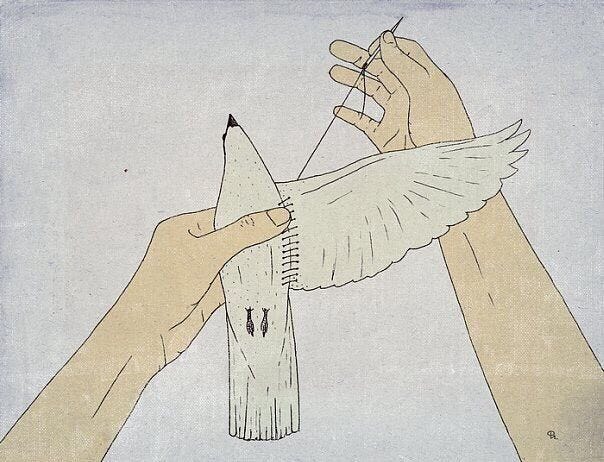
You might not have the ability to forgive another person today even if you have the desire. And that is a limit you have, a growth edge that can be worked with and expanded, but that takes time and a kind of gentleness with yourself, a self-compassion in allowing yourself to be where you are without seeing that place as wrong. But when goodness becomes a fixed state of grace in which you should have bottomless capacity and no dark, shadowy, or ambivalent feelings, self-forgiveness becomes structurally impossible, because your own edges become evidence of your failure, and your limits become evidence of your inability to be healed and good enough.
Self-forgiveness begins much closer to home than we think. Not in the grand gesture of releasing resentment for another person, but in the quiet, difficult act of accepting yourself as you actually are - flawed, limited, sometimes unable to love or forgive in the ways you wish you could. Capable of hurting others. Capable of being hurt and not recovering on anyone else’s timeline.
This is where the real work lives. Not in becoming good enough to forgive, but in becoming honest enough to know yourself - your life story, your wounds, the ways you adapted to survive what happened to you. And in that knowing, finding not shame but medicine. The pain you lived through shaped you, and you made meaning of that shape. The question is whether you’re willing to author that meaning yourself now, rather than keep moving with the one you inherited.
You cannot do that work when you’re distancing yourself from your feelings. And you also can’t do it for another person.
In radically accepting yourself, you realize that other people’s inability to love you the way you’d like to be loved is not about you. That their inability to recognize the harm they caused is about them. And then you begin to find space to forgive yourself for the ways you “were naïve”, for how you took on the abuse, for how you didn’t stand up for yourself, for how you projected your pain onto others when you didn’t know how to tend it.
Some years ago, after years of being estranged from my adoptive mother, she reached out. I knew that I needed to be honest about how she had hurt me if I was to open myself to any relationship with her. She wasn’t able to meet me where I wanted her to. She couldn’t recognize the harm she had caused me, and at that moment I understood that it wasn’t about me, but about her.
She wasn’t willing to see herself as someone who could cause harm, because she too was supposed to be good. She didn’t know how to hold her own darkness, and so she couldn’t acknowledge that darkness in her relationship with me.
If, to release my resentment, I depended on her to apologize, or even simply to say that she had done something wrong, I’d be giving my power away. In her inability to see me, and to see herself, I realized that her acknowledging the hurt or not didn’t change the pain or the way I had been shaped by it. The resentment dissolved into a sadness for her, because I saw in her someone who couldn’t accept her whole self.
I could only perceive things that way because I had been in intentional, creative relationship with the pain through my body. Because I listened when my body froze in her presence, and I lovingly worked with that response and the subjective layers woven with it. I let myself feel the anger toward her that I had suppressed for so long, and the grief for not having the mother I wished I had.
It was only by going to those places within myself that I could reintegrate the parts of me that had been exiled through that relationship; and once I felt whole, I didn’t need her to validate my pain. I could do it myself.
What I was able to do was not minimize the impact of that relationship, but look at it from a different vantage point, where I held resources I didn’t have in the past. I understood, in a felt way, that her inability to give me what I needed passed through me and hurt me, but it didn’t originate in my worth. Once that meaning reorganized, I released a tremendous weight, because it stopped being about me - I stepped out of victimhood.
No longer a victim, whether I forgave her became irrelevant. I didn’t need to prove my goodness. I started seeing us more horizontally, rather than always seeing myself as small, weak, and vulnerable in her presence. I no longer needed to cut ties completely, because now I could be in her presence without losing myself.
What I mean is that I finally started living that relationship in the present rather than from the past. In the present, I was no longer willing to accept abuse, and knowing in my body that I could take care of myself, hold boundaries, leave when I wanted to, allowed me to be in relationship, and to release the resentment for her failing to take care of me the way I needed her to.
So, can we live well while carrying an unforgiven relationship?
I think the answer is individual. Forgiving, for me, opened up a lot of space within myself for focusing on what nourishes me. But I think we can still nourish ourselves, be committed to our own well-being, while carrying a relationship with someone we haven’t been able to forgive, or that we might not even be interested in forgiving. The question is: how does that impact you?
If you do want to forgive, my advice would be to keep nourishing yourself - giving yourself so much care and nourishment that you become the medicine that heals the wound.
A full life is not clean and tidy, it is full of mess and movement. Maybe what living well requires, more than anything - in the subjetive sense, is an honest relationship with ourselves, with our life story, with our grievances and limitations and longings.
Maybe the question needs to change: not can I live well without forgiving, but what becomes possible when I put down the obligation to forgive and focus, instead, on taking care of myself?
Warmly,
Ana Liz